Verdict
The DualSense Edge is the most thoughtfully customizable PlayStation controller Sony has ever shipped, but a six-to-eight-hour battery and unchanged potentiometer sticks keep it from being the clean Elite Series 2 rival its price demands.
I've been swapping back and forth between a stock DualSense and an Xbox Elite Series 2 since the PS5 launched, mostly because neither one lets me forget the other exists. The Elite pad's back paddles and interchangeable sticks made every PS5 controller feel unfinished by comparison, and Sony clearly heard that complaint enough times to build an answer. The question with the DualSense Edge was never whether Sony could out-engineer the standard pad — it's whether $199.99 of customization is worth a battery that dies before a long raid night does.
First impressions
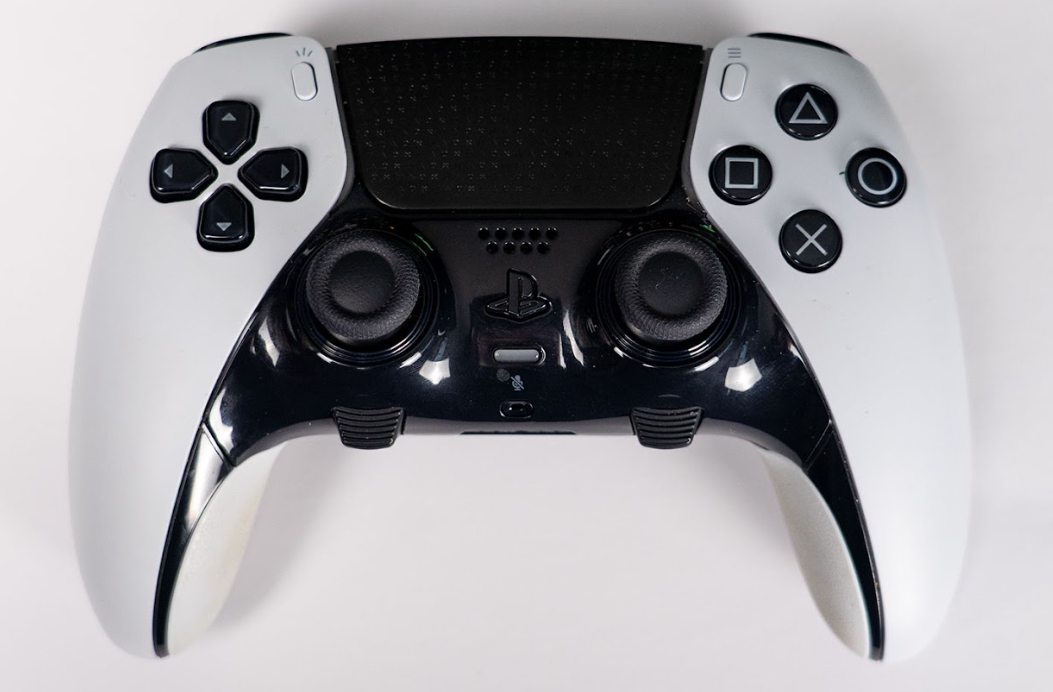
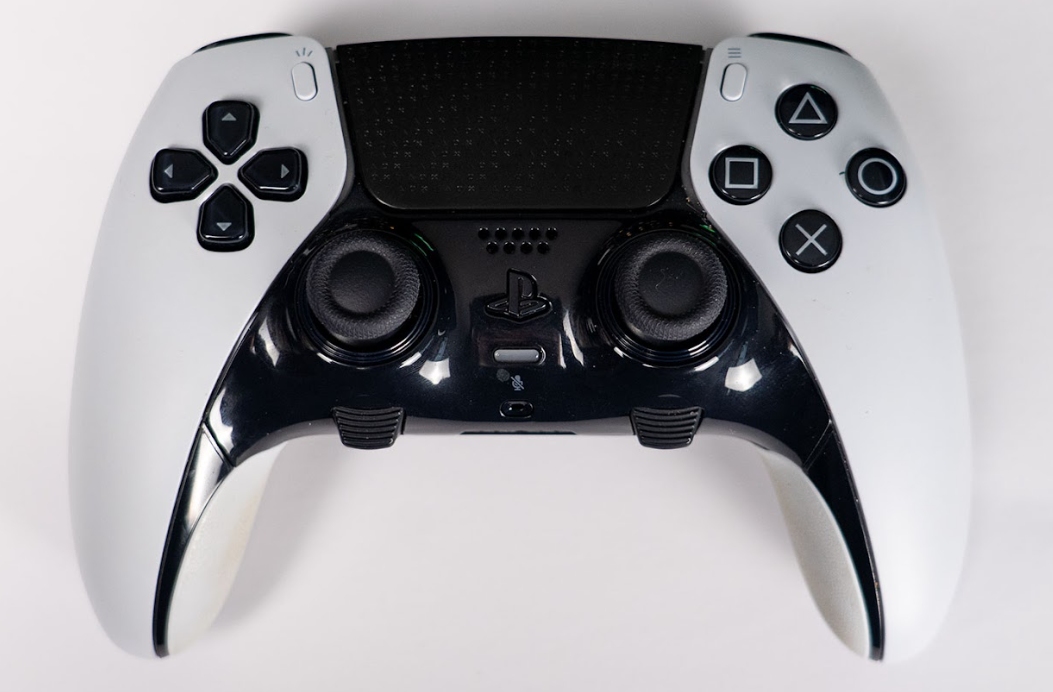
Pull the Edge out of its case — and yes, it ships with an actual zippered carrying case, braided USB-C cable included — and the first thing you notice is how little it visually changes from a standard DualSense. Same light bar, same touchpad, same general shape — Sony's clearly happy keeping that shell around for everything from the Edge to the GTA 6-themed special editions it just unveiled. The differences are all in the details: two small Fn buttons above the sticks for quick-switching between three stored profiles, a slightly different texture on the grips, and a connector housing on the back where the magnetic back buttons click in.
Sony includes two sets of back buttons — half-dome and lever-style paddles — plus three stick cap heights (standard, high dome, low dome) and two low-friction cap options. None of this requires tools. The caps pop off with a gentle tug, the back buttons snap into the housing, and the whole kit fits in the included case with room to spare. After three weeks of swapping parts around for different games, I settled on the lever paddles and high-dome caps for shooters, low-dome for fighting games — and switching between them takes about 20 seconds.
The experience
The real differentiator isn't the hardware, it's the software layer underneath it. The Edge lets you remap every button (including the back paddles) per profile, adjust stick dead zones and sensitivity curves, and — this is the feature that actually earns its keep — set custom trigger stop points on both L2 and R2, independent of the adaptive trigger resistance the standard DualSense already does well. In a game like Call of Duty, clipping the R2 travel down to a hair-trigger tap shaved noticeable time off my reload-to-fire window, and it's the kind of adjustment competitive players on Xbox have had access to for years via the Elite line.
Profile switching happens on the controller itself, no app required: hold the Fn button, flick between three saved configs, done. It's a small thing, but it means the Edge works the way a pro controller should — set it up once per game, forget it exists, let the hardware carry the muscle memory.
The haptics and adaptive triggers are unchanged from the standard DualSense, which is to say they're still the best thing about owning a PS5 controller. Rain on a windshield in Returnal still feels different from gravel underfoot. Sony didn't cut corners here to pay for the customization — it just didn't improve on it either.
The DualSense Edge's limits
Here's where the Edge's price tag starts arguing with itself. Battery life lands around six to eight hours in my testing, depending on haptic and light bar usage — noticeably worse than the standard DualSense's roughly 12 hours, and nowhere near the Xbox Elite Series 2's 40-hour runtime. For a controller marketed at serious, extended play sessions, charging it every evening feels like a design miss, not a rounding error. Sony never fully explained the regression, and "it has more electronics to power" only goes so far when the Elite pad manages five times the endurance.
The stick situation is the other asterisk. Sony's pitch is that user-replaceable stick modules solve drift forever — pop out the worn module, snap in a fresh one for $19.99, no soldering, no sending the whole controller back. That part works exactly as advertised and is a genuinely smart piece of design; iFixit has praised it as one of the most repair-friendly moves a first-party console maker has made. But the modules themselves are still potentiometer-based, the same technology that causes drift in the first place, rather than the Hall effect or TMR sensors that resist it. You're not buying drift-proof sticks — you're buying a controller that's cheaper to fix when, not if, they drift. A handful of owners have also reported PC detection quirks in specific titles (Hogwarts Legacy being the most cited example), though it reads as driver inconsistency rather than a hardware fault.
Who it's for
If you're a competitive player who actually uses trigger stops, back-button remapping, and per-game profiles — ranked shooter grinders, fighting game players who want paddle-mapped specials, anyone who's already outgrown the standard pad's fixed layout — the Edge delivers real, measurable value for its price, and the swappable module system means you won't be buying a new one in eighteen months when the left stick starts drifting during cutscenes. If you're a casual player who just wants a comfortable PS5 controller and better battery life, buy a second standard DualSense for $75 and pocket the difference; nothing about the Edge's core feel justifies the markup unless you're using the customization.
Score: 7.5/10. The DualSense Edge earns its "pro controller" label through software depth and a repair-friendly stick system few manufacturers bother building, but it loses ground on battery life and sticks to a sensor technology it had every opportunity to leave behind.
Sources: TechRadar — "The DualSense Edge justifies its price but it may not be made for you", TechRadar — "The DualSense Edge doesn't improve battery life – it makes it worse", Push Square — "Disappointment as DualSense Edge PS5 Controller Sports Smaller Battery Lasting Six Hours", TechCrunch — "Sony's $200 DualSense Edge wireless controller will release on January 26", iFixit — "The Best Feature of Sony's DualSense Edge Controller Is Durability", TheSixthAxis — "DualSense Edge Review"
Pros
- On-controller profile switching and trigger-stop adjustment are genuinely useful in a way gimmick back buttons usually aren't
- Swappable stick caps and back-button styles (half-dome vs. lever) change actual in-hand feel, not just cosmetics
- User-replaceable stick modules mean drift is a $19.99, five-minute fix instead of a dead controller
- Still carries the standard DualSense's excellent haptics and adaptive triggers — this isn't a stripped-down pad
Cons
- Battery life (roughly 6-8 hours) is worse than the $75 standard DualSense, let alone the Xbox Elite Series 2's 40 hours
- The swappable modules still use potentiometer sticks, not Hall effect or TMR, so the drift mechanism itself hasn't actually changed
- At $199.99 plus $19.99 per replacement stick, the total cost of ownership creeps up fast
The DualSense Edge is the most thoughtfully customizable PlayStation controller Sony has ever shipped, but a six-to-eight-hour battery and unchanged potentiometer sticks keep it from being the clean Elite Series 2 rival its price demands.
See price →As an Amazon Associate, BlitzRig earns from qualifying purchases. Some links in this article are affiliate links — if you buy through them, we may earn a commission at no extra cost to you. See our advertising disclosure.