NVIDIA still hasn't confirmed the RTX 50 Super series exists, and the newest round of supply-chain chatter suggests that confirmation isn't coming soon. Reporting traced back to Chinese outlet Benchlife, and since picked up by Tom's Hardware, TweakTown, Club386 and others, now points to a CES 2027 reveal window for the rumored RTX 5070 Super, RTX 5070 Ti Super and RTX 5080 Super — roughly two years after the base RTX 50 "Blackwell" lineup launched in January 2025, and well past the one-year cadence NVIDIA used for the RTX 20, 30 and 40 Super refreshes.
Nothing here is official. NVIDIA has never acknowledged a Super refresh is coming, so technically every spec, price and date below is still rumor stacked on rumor. But the sourcing has been consistent enough, for long enough, that most of the GPU press now treats "it's coming eventually" as close to settled — it's the when that keeps sliding.
Why it's reportedly stuck
The sticking point, according to multiple outlets citing supply-chain sources, is memory. The Super refresh is expected to lean on denser 3GB GDDR7 modules to boost VRAM across the lineup, instead of the 2GB modules in current RTX 50 cards. Those 3GB chips are reportedly running $60 to $70 each on the open market, versus roughly $20 for the 2GB parts — and NVIDIA would rather route scarce GDDR7 supply toward the data-center and AI cards it can sell by the rack than the gaming GPUs it sells one at a time. That dynamic, more than any design holdup, is what's reportedly pushed the timeline from "late 2026" chatter into "CES 2027" chatter.
What's rumored on the RTX 50 Super spec sheet
Treat every number here as a leak, not a spec sheet, but the picture that's emerged across recent reporting is fairly consistent:
- RTX 5070 Super — 18GB of GDDR7 (up from 12GB on the current RTX 5070), around 6,400 CUDA cores, 275W TDP
- RTX 5070 Ti Super — 24GB of GDDR7 (up from 16GB), roughly the same ~8,960 CUDA cores as the standard 5070 Ti, 350W TDP
- RTX 5080 Super — 24GB of GDDR7 (up from 16GB), around 10,752 CUDA cores — unchanged from the non-Super 5080 — paired with faster 32Gbps memory and a 450W power limit
- A rumored RTX 5060 Super would reportedly bump to 12GB from 8GB
Notice the pattern: on the Ti Super and 5080 Super, the CUDA core counts reportedly don't move at all. The pitch is more memory, not more raw horsepower, which tracks with leaked performance estimates putting the Ti Super and 5070 Super only 7 to 12 percent ahead of their current counterparts.
What it might cost, and where it'd sit
Pricing leaks, for what they're worth this far out, cluster around $549 to $599 for the RTX 5070 Super, $749 to $799 for the RTX 5070 Ti Super, and $999 to $1,199 for the RTX 5080 Super. Several reports stress these would sit above the existing non-Super cards rather than replace them outright at the same price — meaning the current RTX 5070, 5070 Ti and 5080 would likely stick around as the cheaper options rather than get discontinued on day one.
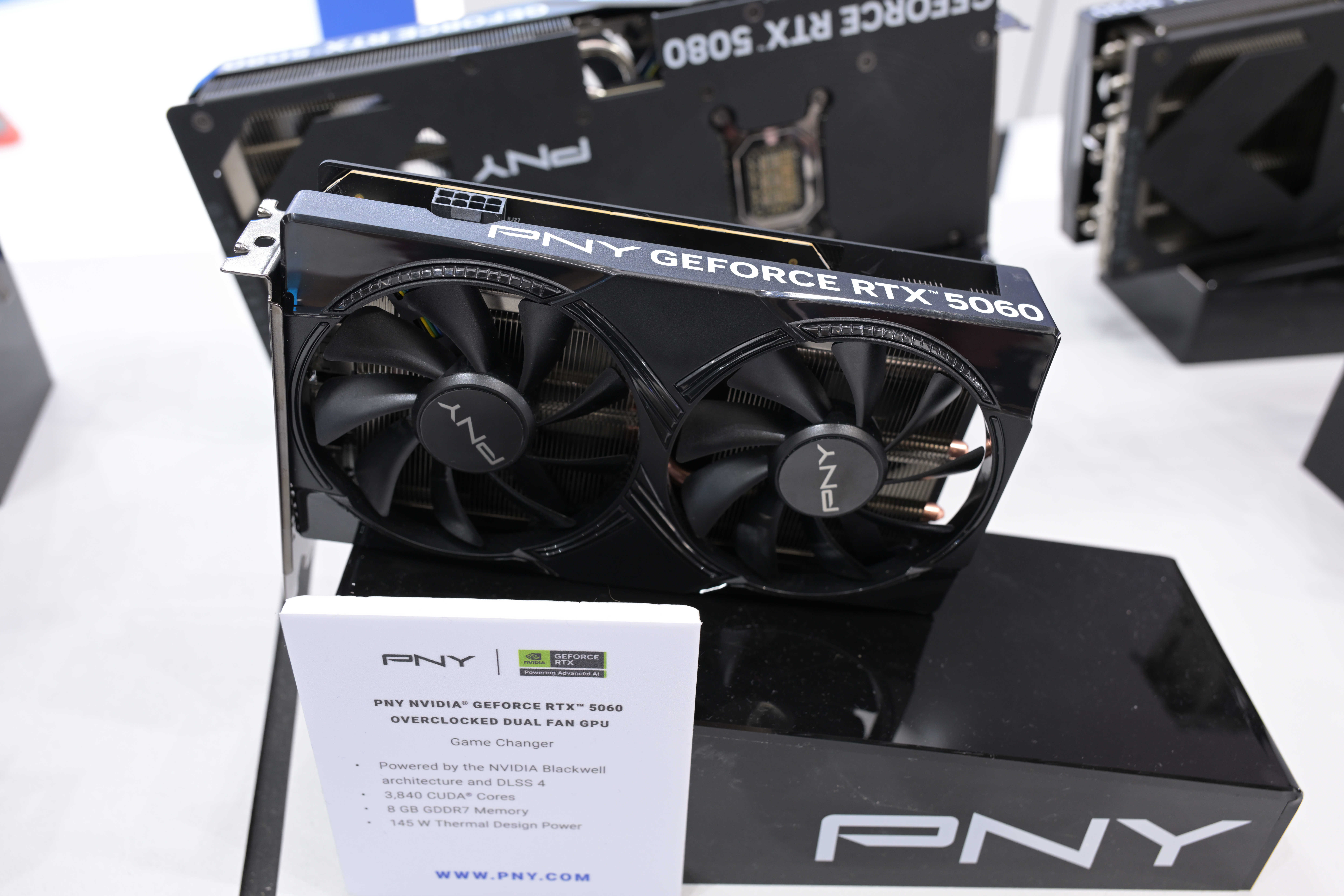
That would put the Super cards squarely as the "more VRAM, same price tier or a bit above" option for buyers who've been annoyed by the 12GB and 16GB ceilings on NVIDIA's current midrange and high-end Blackwell cards — the same RTX 5070 and RTX 5060 already anchoring plenty of current builds — if, and when, they actually ship.
Until NVIDIA says a single official word, this is still a rumor with unusually good sourcing. CES 2027 in January is the date to watch; we'll update the moment NVIDIA confirms anything, and if you're shopping for a GPU right now, don't hold your build hostage to a launch window that's already slipped once.