Valve's two big living-room bets are both on the market now, and both are showing the seams that come with actually shipping hardware. The Steam Frame, Valve's standalone VR headset, went out to the first wave of buyers on September 14, while the Steam Machine console — out since late June — is still working through a growing queue of reservations Valve says won't ship until the end of the year.
Two different products, two different headaches. Here's where each one actually stands.
Steam Frame: shipped, reviewed, and split opinion
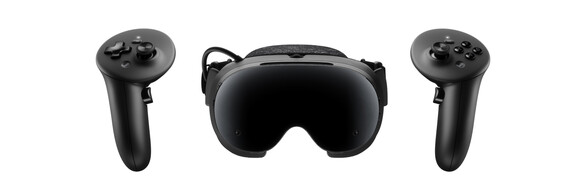
Reservations for the Steam Frame opened September 14 and closed three days later at 10 a.m. Pacific, with purchase invitations going out to the lucky ones starting September 18, according to VR.org's launch tracking. Pricing landed at $1,059 for the 256GB kit and $1,299 for 1TB — each bundle includes the wireless Steam Frame Controllers, a dedicated Wi-Fi 6E adapter for PC streaming, and a copy of Half-Life: Alyx. The power brick, in a very Valve move, is sold separately for $29.
Under the hood it's a Snapdragon 8 Gen 3 chip, 16GB of RAM, dual 2160x2160 LCD panels running 72–144Hz, and a 185g visor — light for a standalone headset doing this much compute. The headline feature is Valve's foveated streaming, which only pushes full-detail video to wherever your eyes are actually pointed and compresses everything else, claiming over a 10x bandwidth improvement when streaming PC games wirelessly.
Early reviews, including PC Gamer's, landed mixed. Praise went to the industrial design, the strength of the wireless PC streaming pipeline, and how well games built natively for the ARM chip perform. The complaints were just as consistent: patchy compatibility when emulating existing Steam library titles that weren't built for ARM, underwhelming built-in speakers, battery life that doesn't stretch far, and a price tag that puts it well above most standalone VR competitors. None of that is fatal, but it's the kind of split verdict that tends to keep a product niche rather than mainstream — at least until software support catches up.
Steam Machine: still getting used to being real
The Steam Machine has had a longer runway to prove itself, having launched its reservation system back in late June at $1,049 for the 512GB model and $1,349 for 2TB, with Steam Controller bundles running $1,128 and $1,428. Valve has been open that the price landed higher than anyone wanted because of the memory market spike the industry's been calling "RAMageddon" — the same crunch that's pushed Steam Deck prices up as much as 46% this year — even Valve, by its own admission, wasn't thrilled with where the number ended up.
Months later, demand still outpaces supply. Reports indicate new reservations placed now won't be fulfilled until the end of 2026, a gap wide enough that Valve has had to manage expectations on its own forums. There's also been a more alarming issue: some units are triggering a red warning light prematurely, which sounds like a hardware failure but, per Valve's own troubleshooting posts on Reddit, is usually fixable with a short reset sequence rather than a return.
On the upside, SteamOS keeps getting more flexible. Since version 3.8, Valve has let anyone build a "Steam Machine" out of their own PC parts and run the same OS experience, and the more recent SteamOS 3.9.2 update specifically targeted Remote Play and VRR bugs on Steam Machine, plus streaming stability issues connecting to the Steam Frame — a sign the two devices are increasingly meant to work as one ecosystem, not two separate launches.
What to watch
Valve rarely rushes, which is exactly why a company that took the better part of a decade between Steam Machine attempts is now running two hardware lines at once, with the bugs to show for it. The Frame needs broader game compatibility to justify its price to anyone outside the VR faithful, and the Machine needs Valve to actually catch up on orders before the RAM market cools off and undercuts its own pricing logic. We'll keep tracking both as SteamOS updates roll out and the backlog clears.
Sources: VR.org - Steam Frame Release Date, VR.org - Steam Frame Price, VR.org - Steam Frame Specs, PC Gamer - Steam Frame review, PCWorld - Steam Machine price and date, TweakTown - Steam Machine release update, VideoCardz - SteamOS 3.9.2