Verdict
A superb-sounding dynamic mic with flexible USB and XLR outputs, but it is pricey and its software and monitoring latency draw consistent criticism.
Streamers and podcasters have spent years stuck choosing between a plug-and-play USB mic and a proper XLR dynamic that needs an interface, and the Shure MV7+ is the company's attempt to end that choice. To be upfront, this review is based on Shure's specs and the published testing of other reviewers, and BlitzRig has not run its own measurements. Nearly all of that coverage dates from the mic's spring 2024 launch, so the software and firmware as they stand today are unverified, and the $279 figure is the launch MSRP rather than a current price. The real question is whether a microphone this good can overcome software that reviewers called unfinished.
What the Shure MV7+ actually is
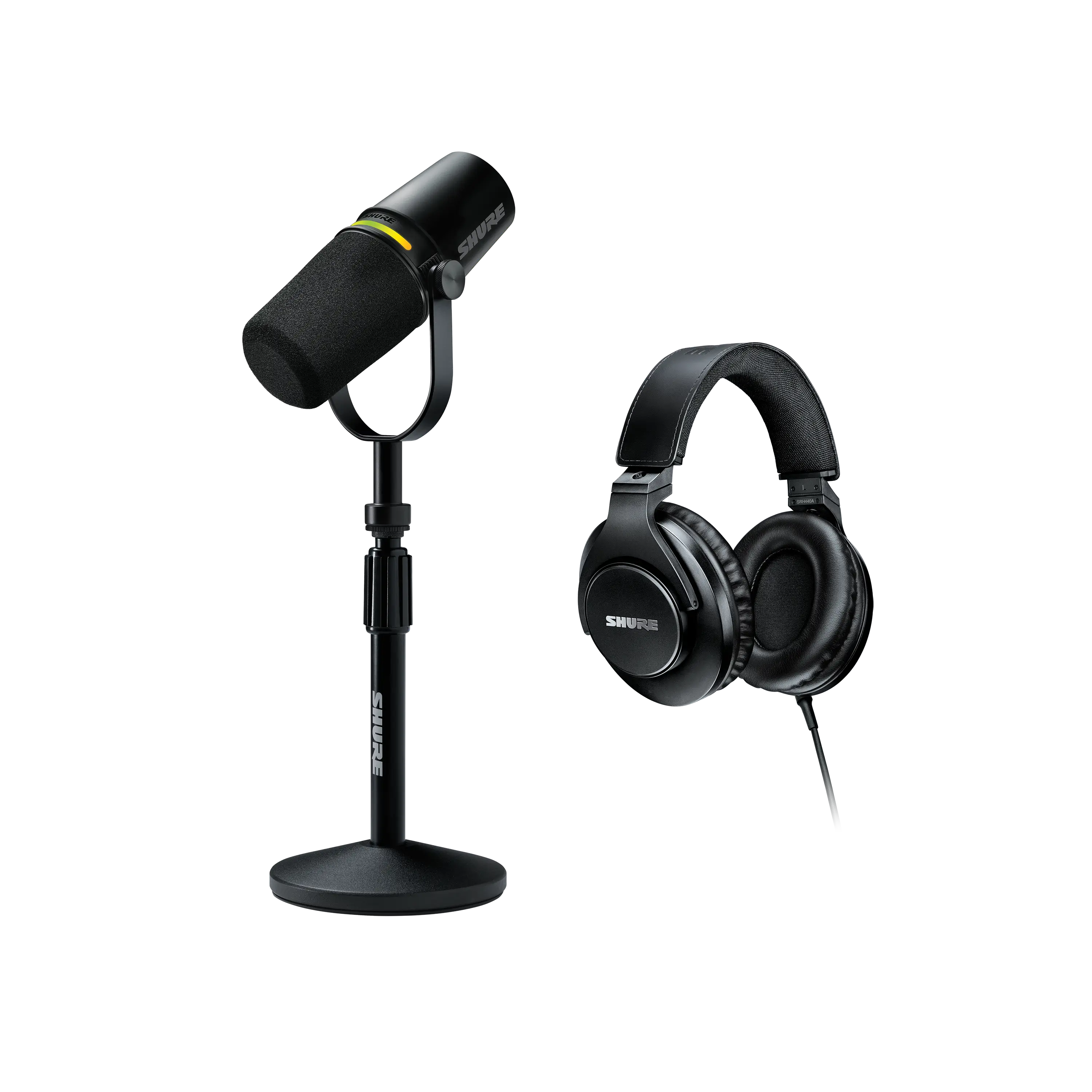
The MV7+ is a cardioid dynamic microphone with both USB-C and XLR outputs and a 3.5 mm (1/8") headphone jack, per Laptop Mag's and SoundGuys' spec rundowns. SoundGuys reports a launch MSRP of $279 and a release date of April 9, 2024. It needs no phantom power, weighs 871 g according to SoundGuys, and ships in black or white.
The headline feature is that the two outputs work simultaneously. SoundGuys notes you can record over USB-C while XLR feeds a separate device, which makes a safety backup track easy to set up. Retailer spec listings (for example zZounds) give a 50 Hz to 16 kHz frequency response and 24-bit/48 kHz USB resolution. Those are retailer figures rather than Shure's own sheet, which I could not load, so check them before you buy.
The control surface is minimal. There is an LED touch strip that works as a level meter and mutes the mic when tapped, and MusicTech describes this as an improvement over the fiddly touch controls on the original MV7. SoundGuys, however, says its reviewer often muted the mic by accident while adjusting its position. That is a real design trade-off, because the strip is the only physical control.
Sound and features: where the reviews agree
On voice quality, the published reviews line up. SoundGuys says the mic "does an excellent job of reproducing a warm yet detailed recording of your voice," that it sounds great over both XLR and USB-C, and that it keeps plosives away and sibilance to a minimum. Laptop Mag lists "fantastic audio reproduction" first among its pros and gave the mic an Editor's Choice badge. SoundGuys scored it 8.2/10.
The DSP is where the "+" earns its name. MusicTech lists built-in auto gain, compressor, limiter, tilt EQ, denoiser, pop stopper and reverb, and singles out the denoiser. In its words, it removes hiss and room noise without the choppiness of a noise gate. SoundGuys adds a high-pass filter (off, 75 Hz, 150 Hz), three reverb types and customizable LED colors. For anyone recording in an untreated bedroom, the denoiser is probably the feature that matters most.
The caveat is that these tools live in Shure's MOTIV Mix app, which works only over USB-C. Run the mic through an XLR interface and you get a good dynamic microphone without the extras.
The limits: software, latency and price
This is where the 7/10 MusicTech score comes from (the page doesn't state its scale). MusicTech called MOTIV Mix "still in beta" and "clearly unfinished," found no way to save a user preset on desktop, and could not change recording quality in the app. It also reported "noticeable latency, particularly when the headphone level is low," and listed slightly more latency than competing mics as a con. It said the PodMic USB gets much closer to zero-latency monitoring, even with DSP on. SoundGuys also noted the desktop app is a separate download from Shure's site. Shure may have updated the software since 2024, and I could not find a source confirming where it stands today, so treat these complaints as a checklist to verify rather than a current verdict.
Then there is cost. $279 was the launch MSRP, and I have no source for what it sells for right now. Laptop Mag lists "pricey" and the lack of a stand in the base edition as its cons, and SoundGuys' reviewer also noted the windscreen remains a little loose, as on the original MV7. Shure sells bundles with headphones, like the SRH440A kit pictured above, but I haven't verified the bundle pricing. Budget for a boom arm or stand on top.
Who should buy it
If you stream or podcast and want one mic that works today over USB and grows into an XLR rig later, the published evidence says the MV7+ is among the better options at this tier. If you build around it, our streaming and content creator setup guide covers the rest of the desk, and a controller like the Elgato Stream Deck MK.2 (see our price-drop note) pairs naturally with a mute-and-scenes workflow. For game chat alone, a headset such as the HyperX Cloud III Wireless will cost you less and take up no desk space.
I would buy it if I planned to record voice regularly, wanted clean audio in a noisy room, and could live with app quirks. I would skip it if you only need to be heard in a party chat, if you want zero-latency monitoring without an interface, or if you refuse to pay for a stand on top of a $279 mic.
Score: 8.0/10. This score is our editorial assessment of the published specifications and reviews, not the result of our own bench testing.
Sources: SoundGuys, MusicTech, Laptop Mag, zZounds listing
Pros
- Warm, detailed voice reproduction praised by multiple reviewers
- USB-C and XLR outputs can run at the same time
- Bigger windscreen keeps plosives and sibilance in check
- Useful DSP: denoiser, auto level, reverb, high-pass filter
Cons
- $279 at launch, and the base kit has no stand or boom arm
- MOTIV Mix software was still in beta and lacks user presets
- Some monitoring latency, especially at low headphone levels
A superb-sounding dynamic mic with flexible USB and XLR outputs, but it is pricey and its software and monitoring latency draw consistent criticism.
See price →As an Amazon Associate, I earn from qualifying purchases. Some links in this article are affiliate links — if you buy through them, we may earn a commission at no extra cost to you. See our advertising disclosure.